|
Casual Thoughts
from a brief visit to Bonn |
|
|
|||||||||||||||||||||||||
|
I The first day I
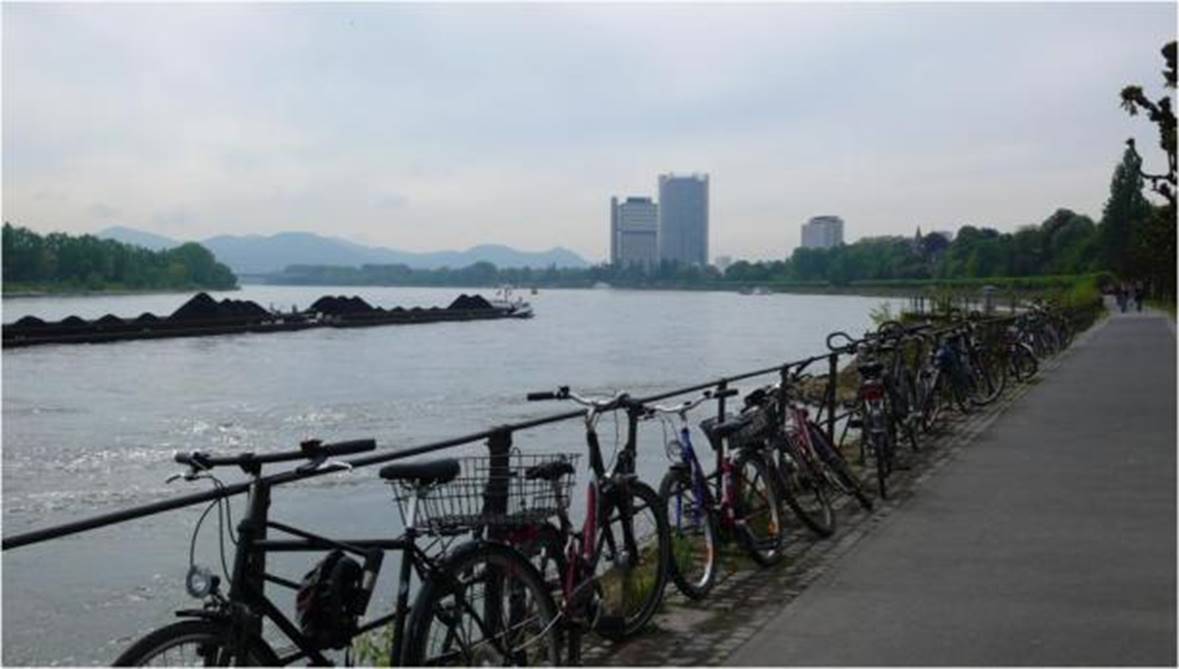
arrived at Bonn, though late, I went to see the However, to my
disappointment: Its banks, straight,
laid with stones, finished by a flat
concrete surface, fenced by iron rails. So artificial,
reminding me the Niagara Falls I have seen. And the water looks
gray and dirty. |
|
|
|||||||||||||||||||||||||
|
But how could I have
expected it differently? Walking by its side
on the second day, I saw more clearly,
in the rain, a river, heavily exploited by humanity: Julius Caesar first
explored the Viewing it as the
outermost boundary of civilization, the Romans had built
fortresses, bridges, dams and canals, over its eight hundred mile reach. Since then, the The fires and smokes
in A Bridge too Far, and the popularity of the
song, Die Wacht
am Rhein, (popularized further,
perhaps, by Casablanca & Grand
Illusion) all readily serve as
testimonies. And today, the So I decided to forget
about the unnaturalness of the |
|
|
|
|
|
||||||||||||||||||||||
|
II Bonn is more
interesting, I think, for two music talents. It is where one's
life began, and another's ended. Both went mad, one
outwardly, the other inwardly. But, which genius, of
an extreme sensitive nature, with penetrating intelligence, will not, in such a
world, facing such a human race? |
|
|
|
|
|
||||||||||||||||||||||
|
On the northwest
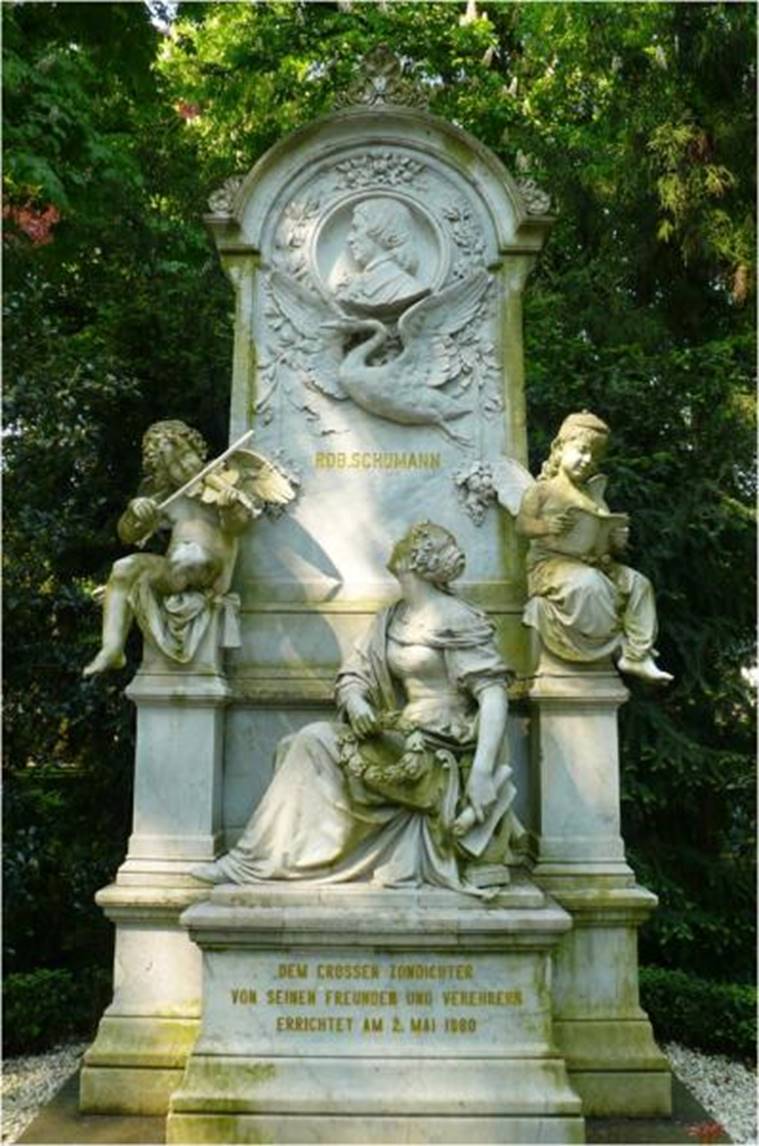
corner of the city edge, I looked for
Schumann. In a quiet place,
shaded by thick green, lilacs sweet, the restless soul of
Schumann finally finds peace, with his beloved. Leaving a bouquet of
purple stocks, I thought of his Florestan & Eusebius, and his sublime literary
& musical ideas. Who else can be more
sensitive than a musician & poet? I would happily give
up my sanity for his fantastic madness. |
|
|
|
|
|
||||||||||||||||||||||
|
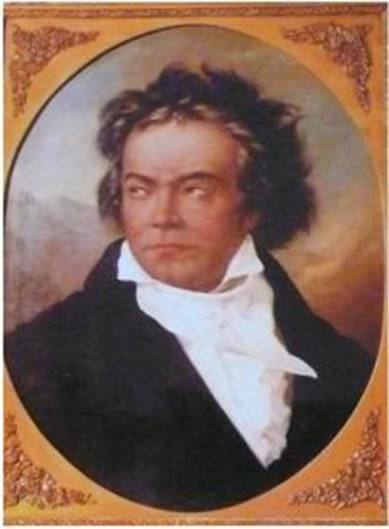
In the house where
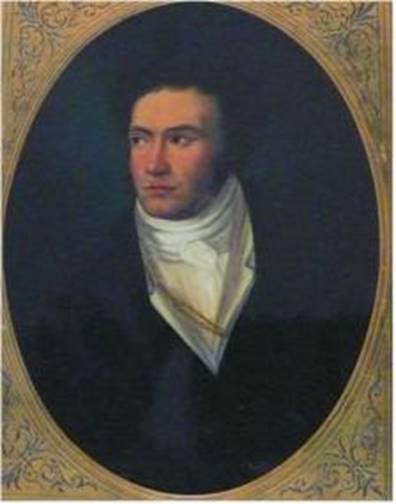
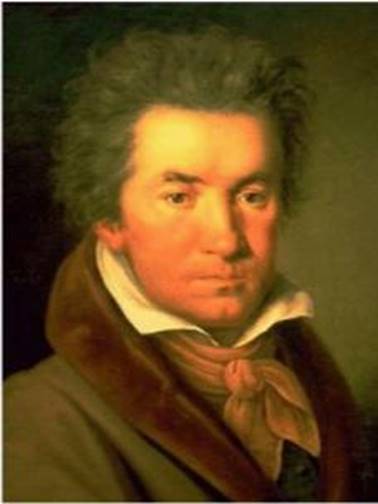
Beethoven first announced his existence, I paused before three
of his portraits. I had, once, tried to
trace his footprints on but they were so
extensive and excursive that I got lost. Now, with these
portraits, I am able to connect all his steps. Once again, I loaded
my Onkyo with his music CDs, from the early piano
concertos and sonatas to nine symphonies and late string quartets. It's true there is
more sweetness in Pathétique, but I don't hear rage
or fury in the Ninth Symphony or Große Fuge. They are only more grand and more profound, which, I doubt, can be matched by any other
classics, or ever reached again by the contemporaries. His music is simply
the greatest, and will always be, to me. |
1806 |
|
|
|
|
|
|
|
|
|
|||||||||||||||||
|
1815 |
|
|
|
|
|
|
|
|
|
||||||||||||||||||
|
1819 |
|
|
|
|
|
|
|
|
|
||||||||||||||||||
|
III Also in Beethoven's birth
house, unexpectedly, I got to see a piece of document
about Chinese history. It's a painting in a
Japanese paper, depicting an attack by Japan
and the United Kingdom in 1914, on Qingdao (in Shandong,
my home province), described as a small fishing
village then, controlled by Germans. The exhibition, of
course, is not to show Chinese history, but tell music (including
Beethoven's), as an important part of the lives of German prisoners in
the war camps in Today, Qingdao has
become a prosperous charming modern city, famous for its beer
production (started by Germans) and European-styled
Oceanside houses. How should we
evaluate a historical event objectively then, given history is a web of entangled
events, so complex and always path-dependent? |
|
|
|||||||||||||||||||||||||
|
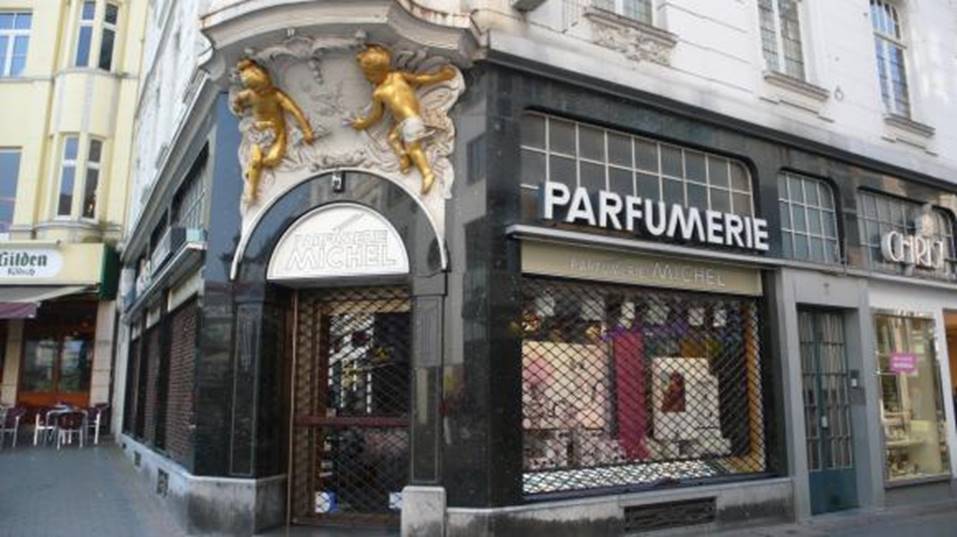
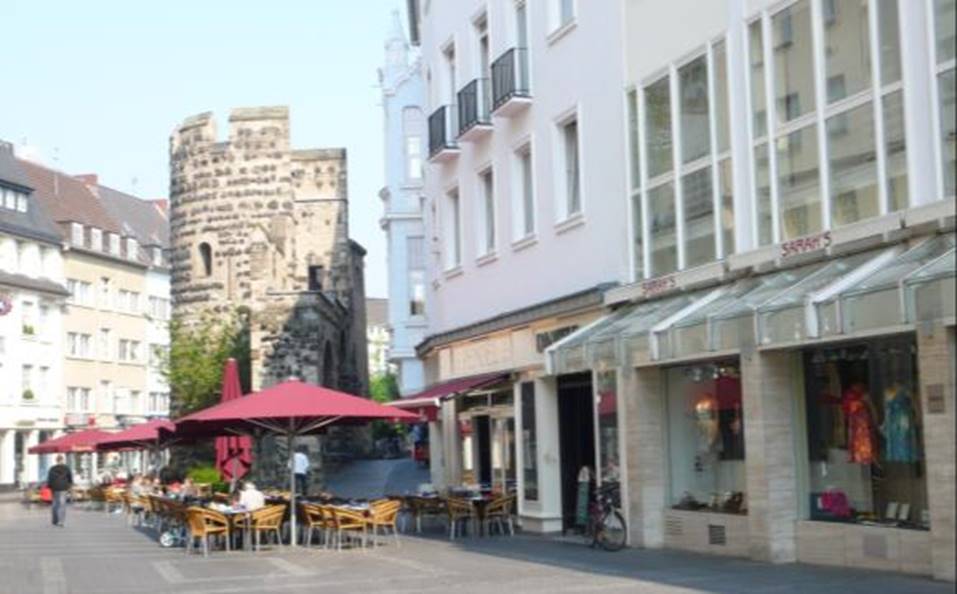
IV I spent my last day
in It's the first day of
May, warm and sunny. But no store was open
even after eleven. I wondered why, not
knowing Germans celebrate
International Workers' Day, the same as Chinese. I window-shopped -
the furniture on display looked very modern. I listened to a man
play violin, and a few ''super models'' posing behind a window, backdropt his performance. I visited the stands
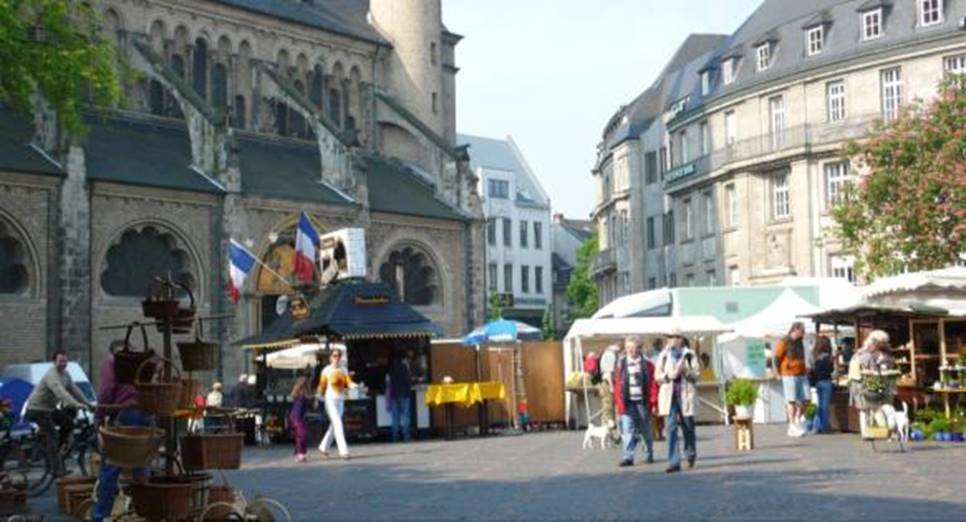
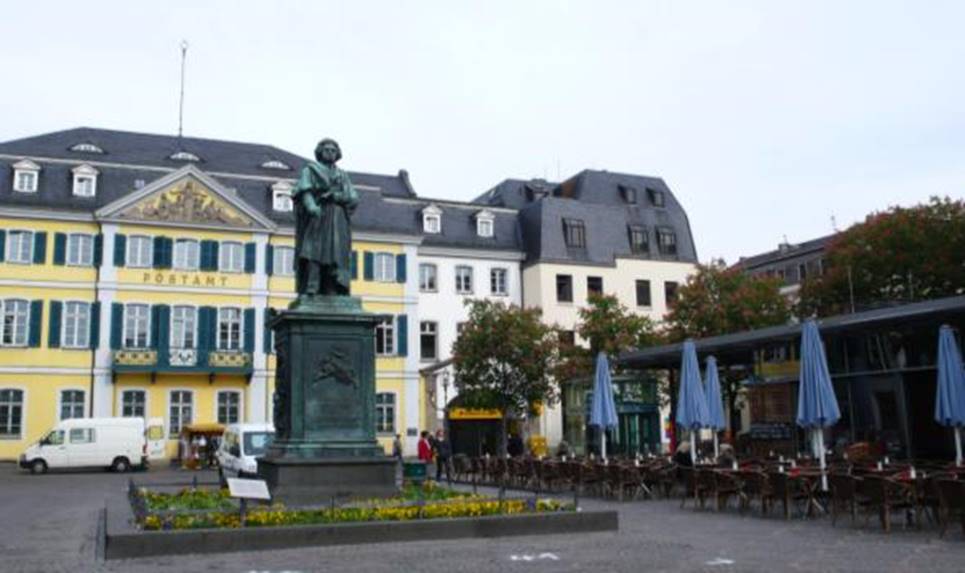
at a market next to an old church, Münster Cathedral. I watched people come
and go, while having a red berry pudding besides Beethoven. Strolling/bicycling,
stopping at a booth for an ice-cream, drinking&dining
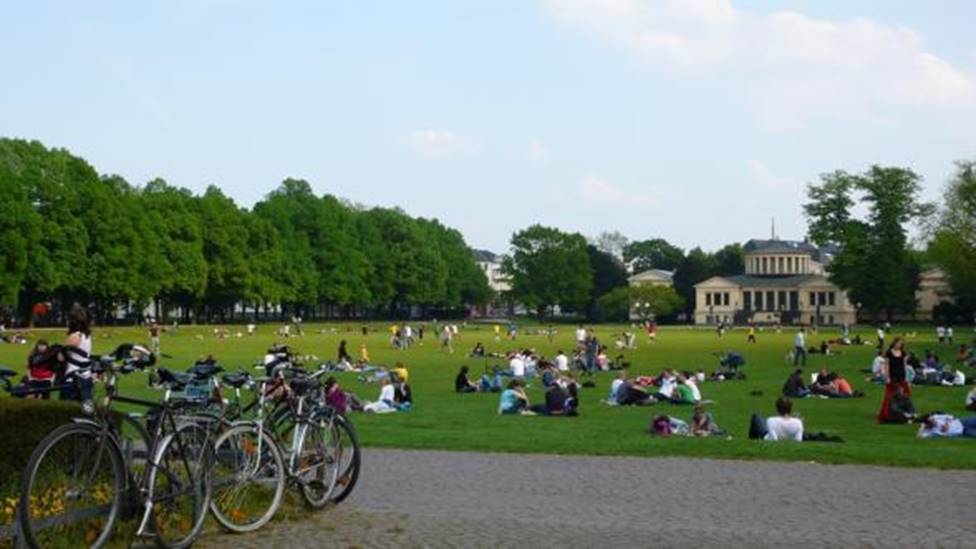
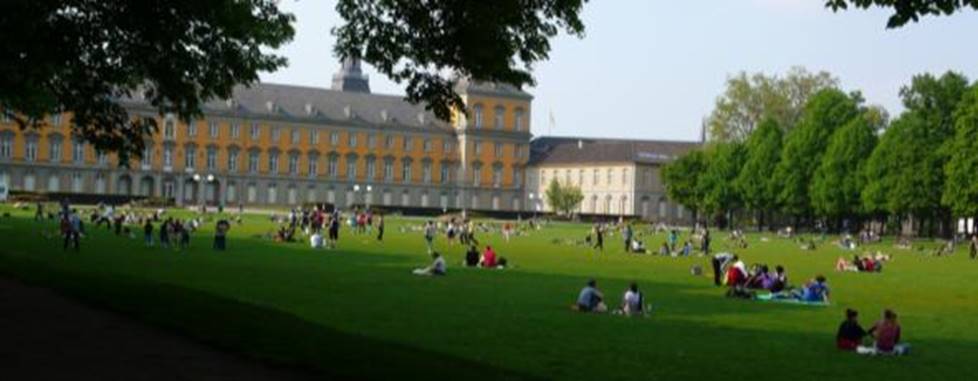
in the open air, having sun,
picnicking or playing on the university lawn, carrying babies,
chatting, laughing or doing nothing... They were no
different from families on holidays in any other places. And a family of three
asked, very politely, if they could sit on the bench where I was sitting. Then, I thought of: The young man at explained me train
schedules nicely and patiently with a shy smile so
obvious. The young girl, I met
on the tram to We walked over a
bridge together to find my lodge. She didn't talk much, but was very gentle and pretty. The middle-aged man
in a gift store who told me, the souvenir I was eyeing, an ornate beer
kettle, though has the name of His voice was very
soft, eyes looking elsewhere. All these seemed
''un-German'' to me - I was very ignorant,
and had only known: Nietzsche's Will
to Power, Wagner's Der Ring
des Nibelungen, Beethoven's Eroica, and of course, Adolf
Hitler... So, what, indeed,
define a nation? how much is it
defined by the few, and how much by its
people? |
|
|
|||||||||||||||||||||||||
|
|
|
||||||||||||||||||||||||||
|
|
|
||||||||||||||||||||||||||
|
|
|
||||||||||||||||||||||||||
|
|
|
||||||||||||||||||||||||||
|
|
|
||||||||||||||||||||||||||
|
|
|
||||||||||||||||||||||||||
|
|
|
|
|||||||||||||||||||||||||